
Stainless steel for Data Centre cooling
The rapid growth of AI has driven the widespread adoption of liquid cooling in data centres, for which Stainless steel has proven to be a critical material. Stainless offers a multitude of benefits specific to the performance of liquid cooling systems, including corrosion resistance, mechanical strength, cleanliness, and a low lifetime cost, maximising efficiency.
Keep reading to learn why liquid cooling has become a necessity in modern data centres, how liquid cooling works, where Stainless steel is used, its benefits in detail and our stock at Stirlings.
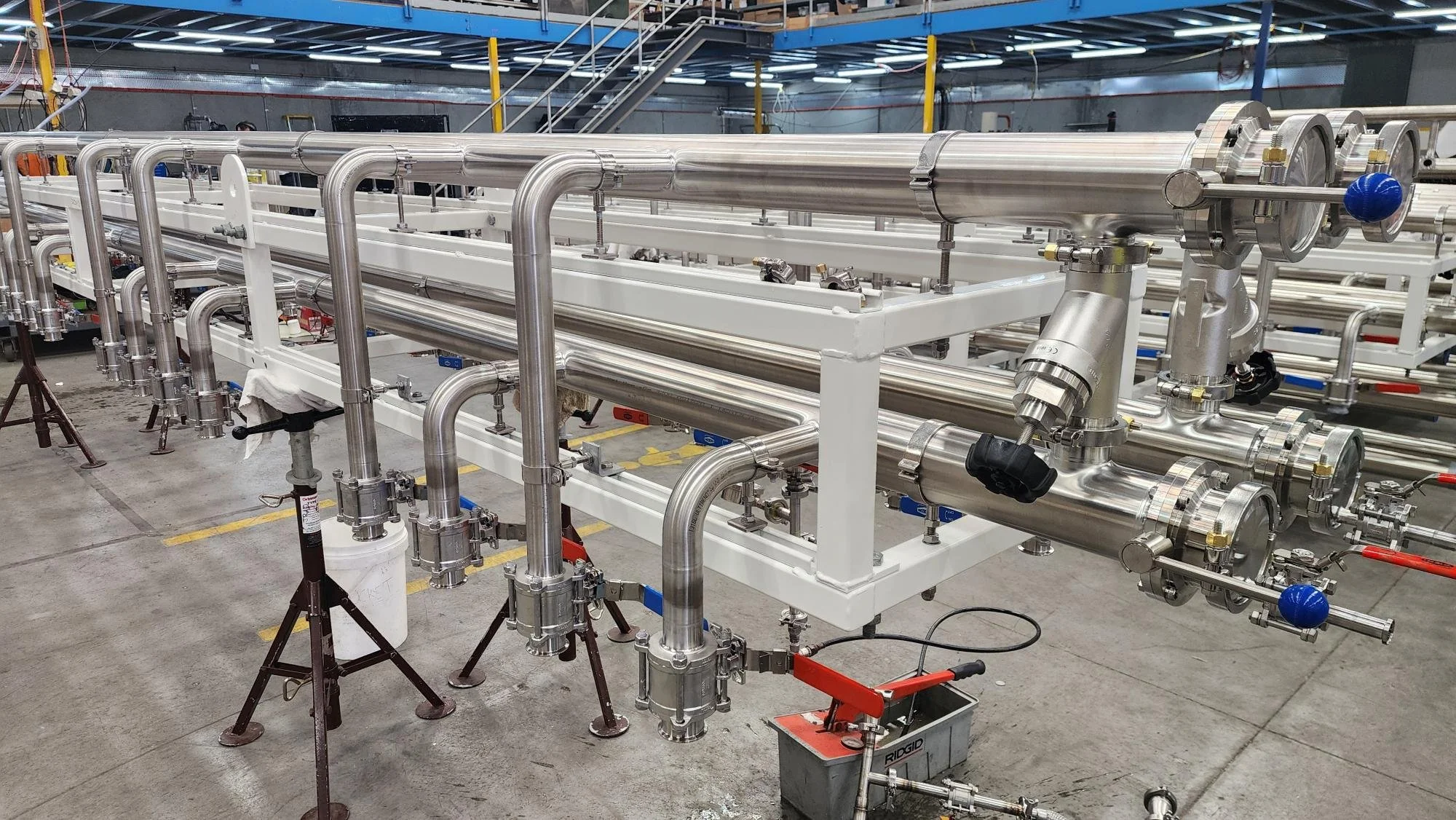
Stainless steel liquid cooling components in fabrication.
The rise of AI and the difference with traditional computing
The launch of generative AI in the early 2020s has seen an explosion of adoption worldwide in a very short amount of time. Notably, these AI servers use GPUs rather than CPUs, allowing them to do the complex computing required for AI tasks.
Unlike the CPUs (Central Processing Units) of regular computing, which previously had around 18-18 cores, and in more modern chips have around 64-128 cores, AI models require thousands of high-performance GPUs (Graphics Processing Units). These GPUs contain 384 to over 16,000 cores each to process massive amounts of data simultaneously.
Changing requirements and the consequences of inadequate data centre cooling
Although GPUs are more energy efficient in terms of performance per watt, their computing capability means they consume much more wattage and produce much more heat than any previousgeneration of computer chip.
An AI data centre can produce roughly 100 MW of continuous heat per hour, which is comparable to 100,000 household electric heaters operating continuously at 1 kW each per hour. Comparatively, cooling capacity on this level would require about 29,000 domestic air conditioners each providing 3.5 kW of cooling per hour.
Removing this extreme heat generated by GPUs is essential, as it can result in:
Reduced hardware performance
Component failure
Shortened equipment lifespan
Unexpected downtime
Traditional industrial HVAC systems are still essential for facility cooling, but they are not solely adequate or efficient enough for cooling this level of heat output. High density GPU rack cooling requires a much more targeted approach: liquid cooling. Did you know, water transfers heat roughly 3,500 times more efficiently than air by volume?
What is liquid cooling
This video gives a short summary on direct-to-chip liquid cooling, with a visual demonstration on how it works:
In brief, direct-to-chip data centre liquid cooling works by circulating water or coolant through a closed-loop system to absorb heat directly from GPU chips.
Cooling from start to finish
Liquid cooling uses cold plates mounted directly onto the hottest components. Inside the cold plate are small internal channels through which coolant flows. The heat from the GPU passes directly into the cold plate and into the coolant.
This video shows a demonstration of how cold plates work:
The coolant carries the heat away from the servers, transferring it to the Cooling Distribution Unit (CDU). Inside the CDU, the warm coolant passes through a plate heat exchanger without the two water circuits mixing.
The heat is then rejected outside the building through cooling towers, dry coolers, or other heat-rejection equipment. After releasing its heat, the coolant is cooled and pumped back through the system to repeat the cycle.
This video shows a short demonstration of coolant entering a CDU.
A note on immersion cooling
For most enterprise and hyperscale data centres, direct-to-chip cooling as detailed above is currently the dominant technology because it integrates with conventional rack architectures.
Immersion cooling, for which the entire server is immersed into a bath of dielectric fluid, is growing in specialised environments where heat loads are even higher or maximum energy efficiency is required, such as:
Large AI training clusters
High-performance computing (HPC)
Cryptocurrency mining
There are two main types:
Single-phase immersion
Fluid remains liquid throughout the process
Heated fluid is pumped through a heat exchanger and recirculated
Two-phase immersion
Fluid boils when it contacts hot components
Vapour rises, condenses on a cooling coil, and returns to the tank
Offers exceptional heat transfer but is more complex and expensive
Advantages
Highest cooling performance available
Supports rack densities exceeding 100-200 kW
Eliminates most server fans
Reduces noise and airborne contaminants
Coolants used in liquid cooling systems
Deionised (DI) Water: has dissolved minerals removed, reducing electrical conductivity and minimising scale formation
Advantages:
Excellent heat transfer
Very low mineral content
Reduced scaling
Widely used in high-performance liquid cooling
Water-Glycol Mixtures: water mixed with ethylene glycol or propylene glycol
Advantages:
Freeze protection
Corrosion protection
Biological stability
Longer service life
Although these coolants are mostly water, dissolved oxygen, treatment chemicals, varying temperatures, and flow conditions all contribute to corrosion and require corrosion resistant materials in the fabrication of the cooling system.
Dielectric fluids, including synthetic hydrocarbons, fluorinated fluids, or engineered dielectric oils (specifically for immersion cooling tanks rather than direct-to-chip systems).
Advantages:
Do not conduct electricity
Can safely contact electronic components directly
Stainless steel in liquid cooling
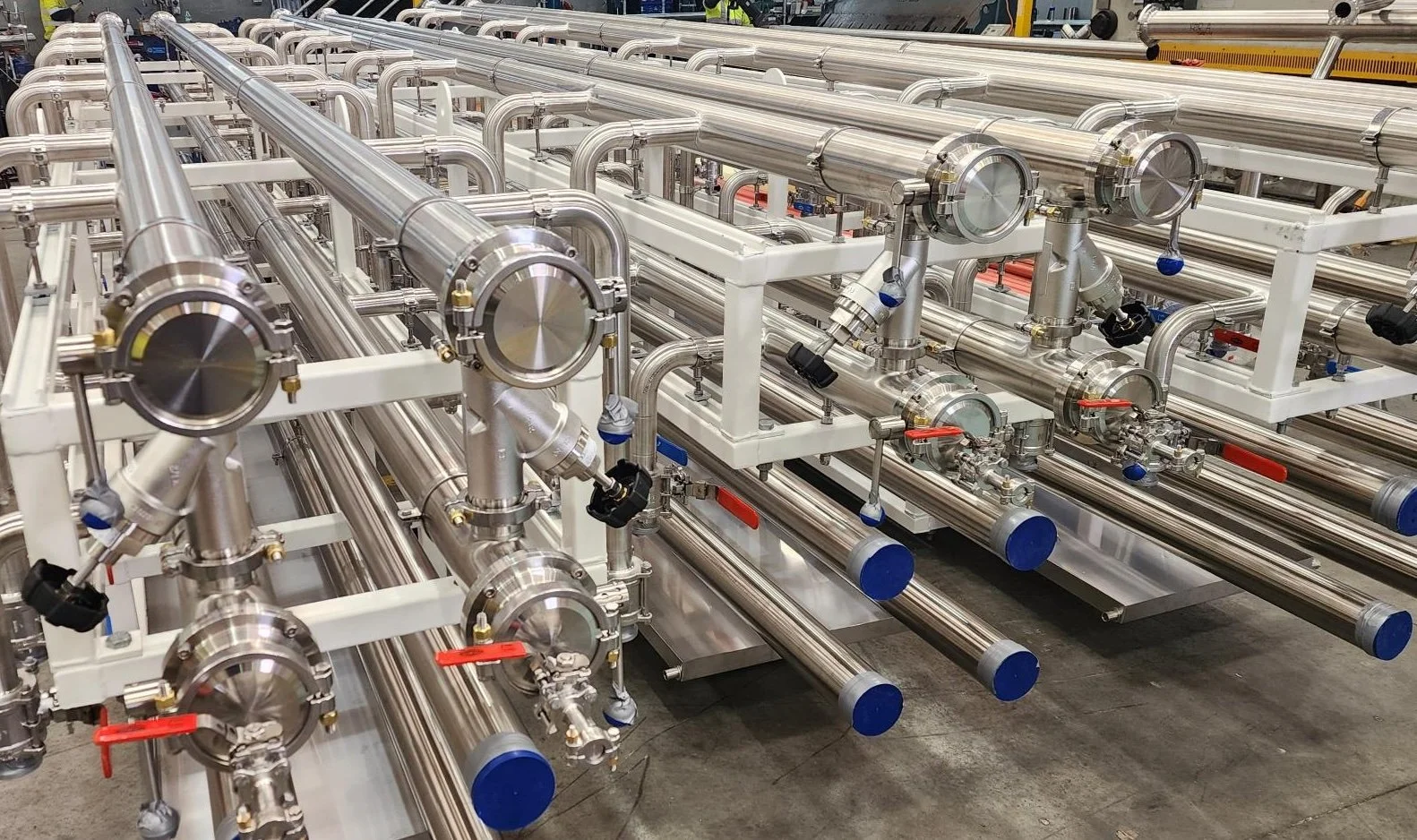
Stainless steel liquid cooling components in fabrication.
Stainless steel has become the preferred material for many vital components of modern liquid cooling systems thanks to its corrosion resistance, mechanical strength, cleanliness, and long service life.
Corrosion resistance
The corrosion resistance of Stainless helps prevent:
Rust contamination
Internal Pipe degradation
Blockages
Reduced heat transfer
Equipment failure
Leading to a longer life of the system and reduced maintenance and downtime requirements.
Mechanical strength
Direct-to-chip liquid cooling systems operate under significant pressure due to the closed-loop pumping of the coolant.
Stainless steel provides:
Excellent tensile strength
High pressure capability
Resistance to mechanical fatigue
Dimensional stability
Long-term structural integrity
This allows thinner wall sections while maintaining high pressure ratings, reducing weight and therefore cost. Stainless may have a higher initial purchase price than alternatives such as carbon steel, but its total lifecycle cost is often considerably lower.
Cleanliness
Liquid cooling systems depend on maintaining exceptionally clean water, and Stainless contributes virtually no contamination even with constant water looping.
Smooth Stainless surfaces:
Reduce particle accumulation
Minimise biofilm formation
Simplify system cleaning
Maintain consistent flow
Electropolishing can also be used where extremely clean water circuits are required.
Lifetime costs
Over the life of a cooling system, Stainless decreases:
Maintenance
Corrosion repairs
Replacement costs
Downtime
Water contamination issues
Inspection requirements
For facilities operating 24 hours a day, seven days a week, reliability is paramount, and Stainless can achieve this to a much better degree to alternatives such as carbon steel.
Material comparisons
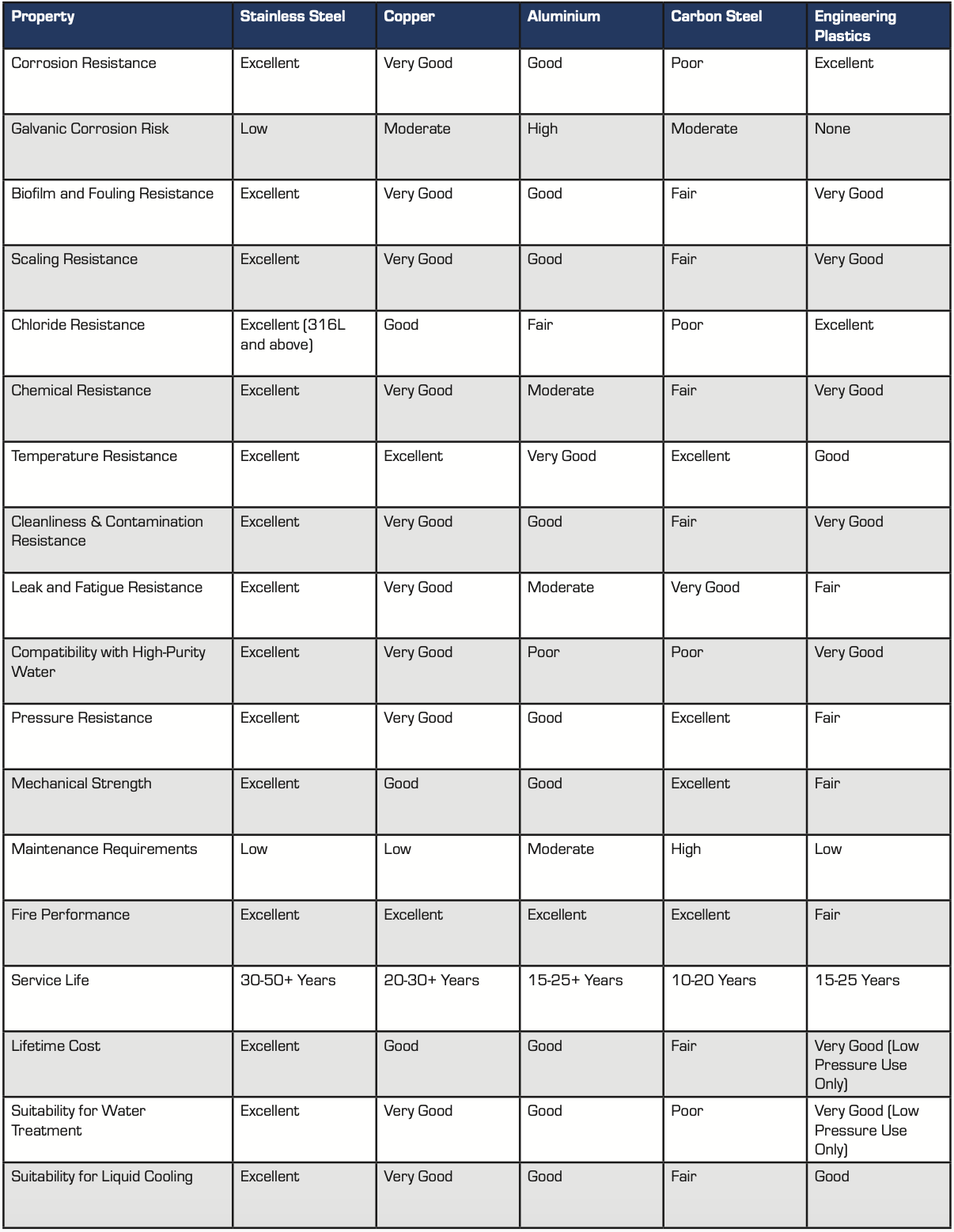
Stainless steel grades used in liquid cooling systems
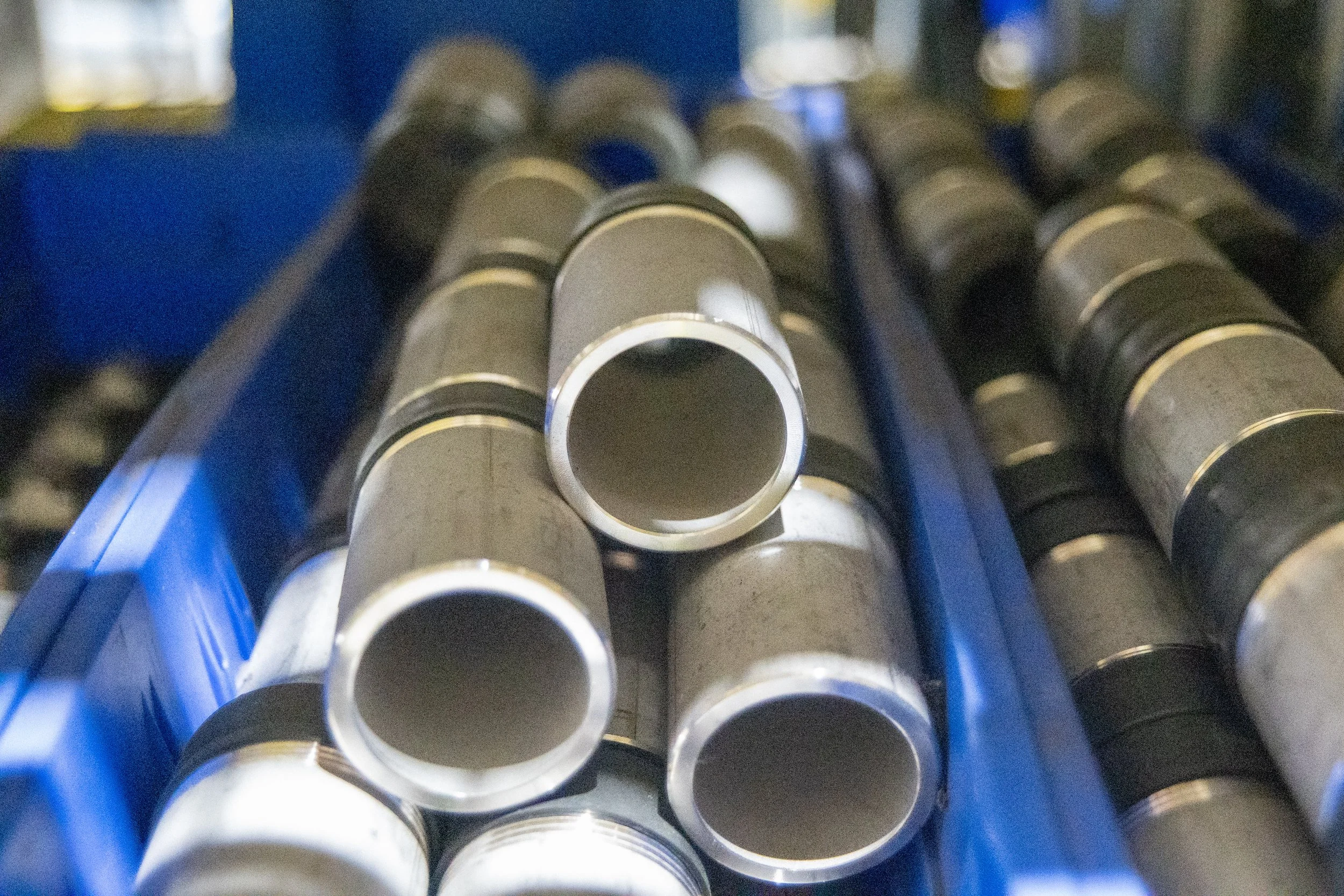
Pipe Fittings in stock at Stirlings.
Grade 304 and 316 Stainless are the most common Stainless grades found in liquid cooling systems.
304 offers:
Excellent corrosion resistance
High strength
Good weldability
Cost-effective performance
It is commonly used for:
General piping
Structural components
Equipment frames
Indoor cooling systems
316 is preferred for:
Coastal environments
More aggressive cooling water chemistry
Enhanced corrosion requirements
And frequently specified for:
High-purity water systems
Heat exchangers
Marine or coastal data centres
Where Stainless is found
Stainless steel appears throughout nearly every part of liquid cooling systems, including in:
Cooling Distribution Units
Heat exchangers
Valves (including flow metres and sensors)
Piping systems
Cooling skids
Instrumentation tubing
Stainless is also vital to water treatment components, including in:
Water treatment skids
Filter housings
RO system piping
Deionisation vessels
Coolant distribution piping
A note on tri-clamps
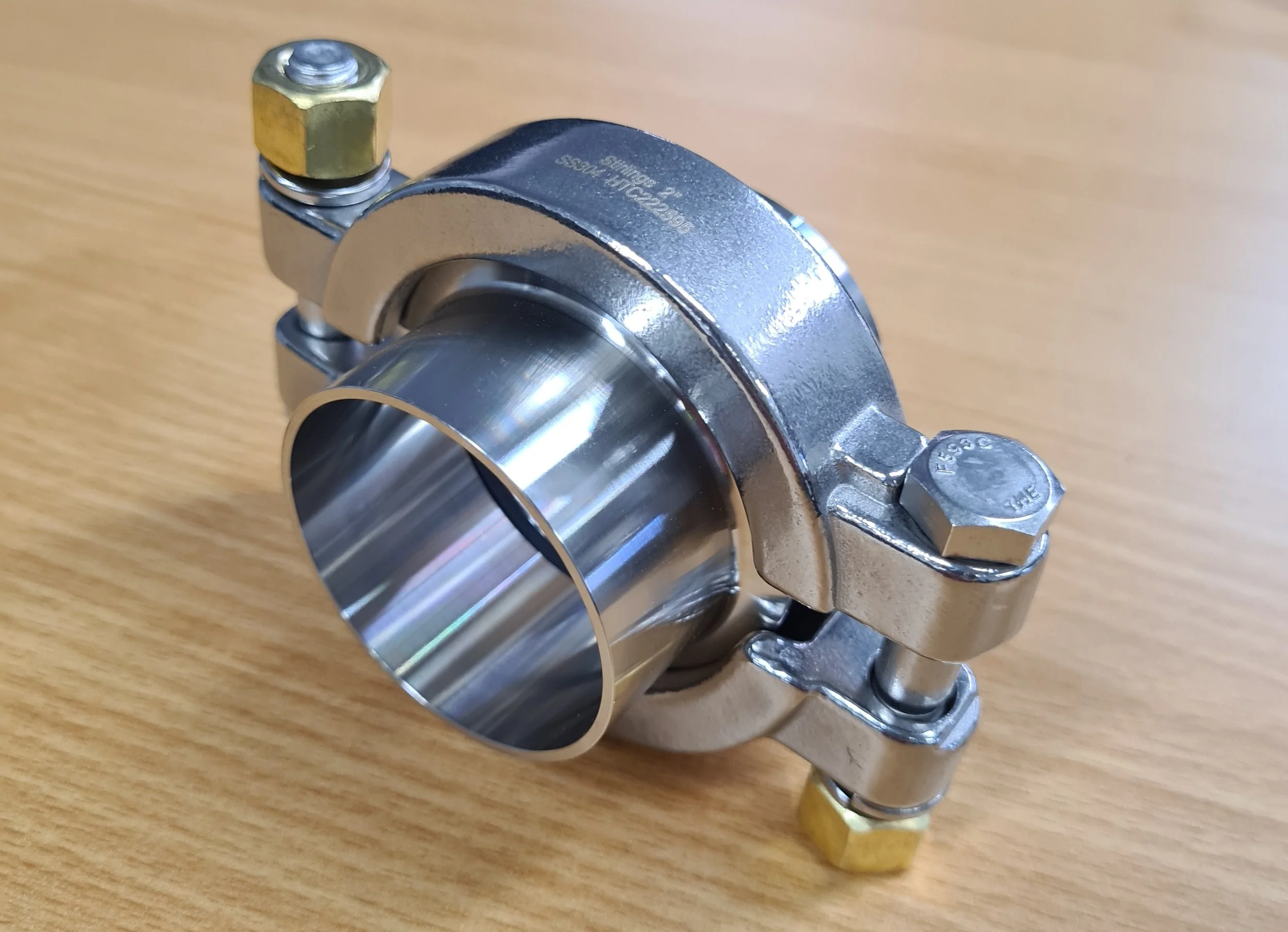
304 assembled tri-clamp in stock at Stirlings.
Tri-clamps are increasingly used within liquid cooling systems where cleanliness, easy maintenance, and rapid assembly are important.
Read about the benefits of tri-clamps here.
Sustainability
Sustainability has become a major priority for data centre operators. Stainless steel provides:
Extremely long service life
Low maintenance requirements
100% recyclability
Reduced replacement frequency
Lower lifecycle emissions
In stock at Stirlings
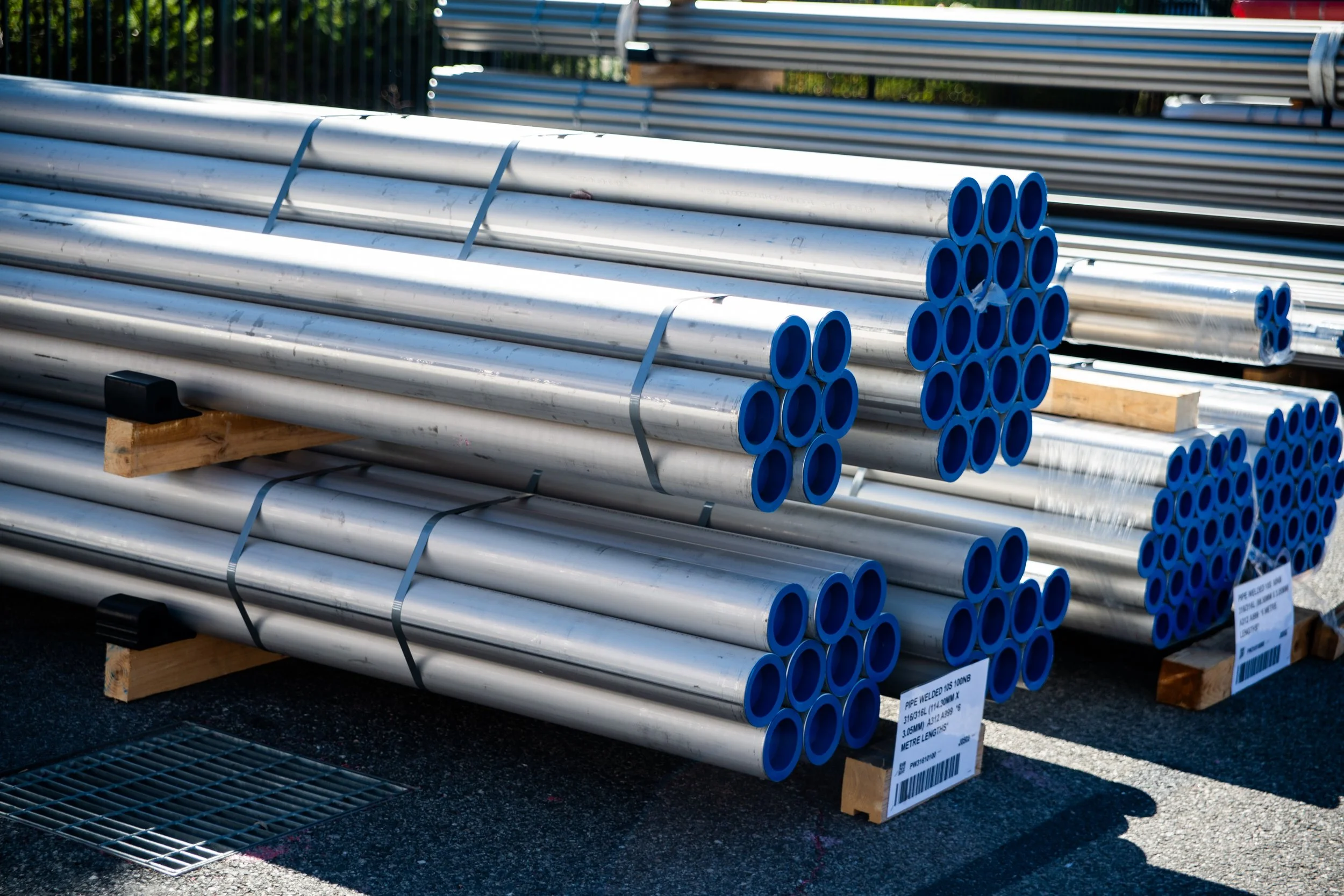
SCH10S 100NB 316 Pipe in stock at Stirlings.
Stirlings offers a one-stop shop nationwide for all data centre Stainless steel liquid cooling and water treatment needs, products including:
SCH10S, sizes from 80NB up to 600NB in both 6.0 & 11.8 metre lengths
Elbows LR & SR SCH10S
Equal Pipe Tees SCH10S
SCH10S Pipe Concentric & Eccentric Reducers
SCH10S Pipe Caps
Table E & EN1092 PN16 Pipe Flanges
Table E Blind Flanges
AS1528 Tube 12.7mm up to 203.2mm
AS1528 Ultibend Tube Elbows in 45 and 90 degrees
AS1528 Tube Concentric Reducers
Table E & EN1092 PN16 Tube Flanges
Tri Ferrules
Viton & Platinum Cured EPDM Tri Gaskets
Tri Blank Caps
Double Bolted High Pressure Tri-Clamps
Anything additional required can be sourced though our extensive stock lines or obtained via indent.